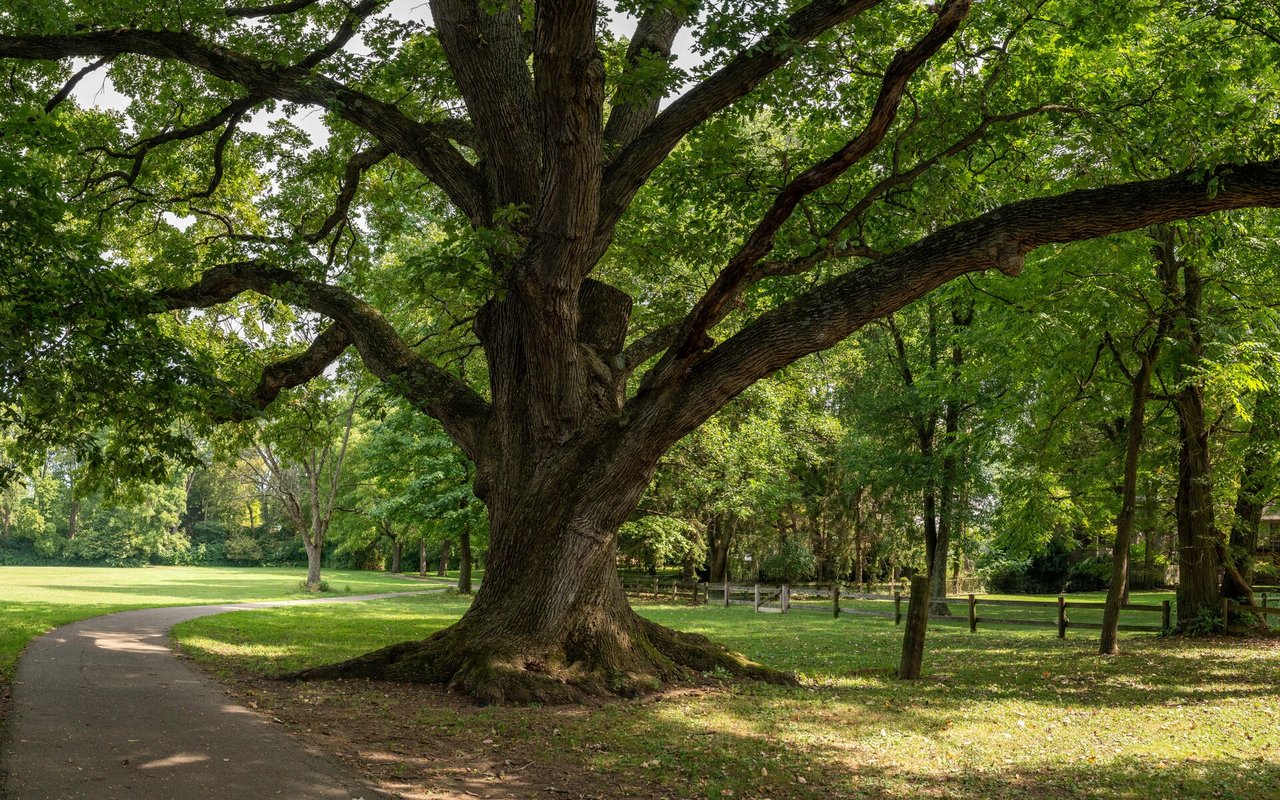
The October 14 announcement focused on Muny. Most of the paperwork behind it deals with the University-owned land around the course.
Austin and The University of Texas at Austin say they are close to an agreement that would transfer ownership of Lions Municipal Golf Course to the City. That would keep the historic course known as Muny and preserve it as public green space. The course covers 141 acres at 2901 Enfield Road. The course would be handed over through amendments to the 1989 Brackenridge Development Agreement. That is the same document that sets how UT may develop its land on both sides of Lake Austin Boulevard. For Tarrytown, the course is the headline. The longer-lasting result will be the building rules for the land next to it, and those rules are only partly written.
What the October 14 proposal actually does
The City's announcement covers more than Muny. Along with transferring the course, the amended agreement would set out the general process for four other items:
- An update to UT's lease of property at Mueller
- An exchange of City rights-of-way
- Creation of a Tax Increment Reinvestment Zone, or TIRZ
- A regulating plan that both sides agree on
The money comes from donors. The Austin American-Statesman reported that "very large" gifts from anonymous donors, in amounts not disclosed, would let the City buy the land from UT. Mayor Kirk Watson said the deal would preserve the green space "really, at no cost to the taxpayer." The same article says the proposal would also transfer the fields and gym used by the West Austin Youth Association to that organization.
The size of those gifts explains why this took decades. Community Impact reported that the 155-acre property holding Muny and the WAYA campus is appraised at more than $680 million. Austin pays UT just under $500,000 a year to lease the course. Annual rent below half a million dollars on land valued at hundreds of millions is the gap that has kept Muny's future uncertain for so long. The university received the Brackenridge land "for the benefit of The University of Texas," the Statesman notes, so UT has to account for what the land is worth.
In a statement to the Statesman, UT described its approach as one "that honors our fiduciary responsibilities and stewardship obligations" and said the agreement will go to the Board of Regents for consideration.
The calendar, and which date matters most
Nothing is final yet. A final agreement needs approval from both the Austin City Council and UT's Board of Regents. The City has posted the order of steps on its Brackenridge Tract page:
When | Who | What is on the table |
|---|---|---|
October 2026 | Environmental Commission and Planning Commission | Staff briefings on the Muny transfer and the amended agreement |
November 19, 2026 | Austin City Council | Vote on the amended Brackenridge Development Agreement |
Winter 2026–27 | City staff and UT | Drafting the regulating plan and the TIRZ |
Spring 2027 | Boards, commissions and City Council | Review and adoption of the regulating plan and TIRZ |
To be scheduled | UT Board of Regents | Approval of the land transfers |
The Environmental Commission briefing was set for October 21, and it was a briefing, not a vote. The November 19 vote gets the attention because that is when Muny's transfer is decided. The spring 2027 step is when the specific rules for future development on UT's remaining land would come back to the commissions and the Council.
The Muny Conservancy welcomed the proposal in its October 14 statement. It also said the work is not finished and asked supporters to speak up before the November 19 vote. Its page includes a template letter and instructions for contacting Council members.
The rules for the land around the course
The City has posted a summary document called Proposed Amendments to the BDA with the University of Texas. It sets development standards for non-UT projects in the 190.26-acre area. These are the standards the spring 2027 regulating plan is supposed to follow.
Standard | Proposed term |
|---|---|
Overall floor-area ratio | 0.6:1 across the entire area |
Per-site maximum FAR | 5:1, unless Council approves more through rezoning |
Height, contiguous to and north of Lake Austin Blvd | 65 feet |
Height, south of Lake Austin Blvd and not contiguous to it | Up to 105 feet |
Overall impervious cover | 75% |
Lady Bird Lake setback | 200 feet total, a 150-foot primary and 50-foot secondary |
The City's summary describes a cap of 65 feet "when viewed from Lake Austin Boulevard." The detailed terms say no building can be taller than 65 feet measured from the boulevard. They also allow up to 105 feet for buildings south of Lake Austin Boulevard that are not next to it. Both height limits allow use of the City code's Section 25-2-531 height-limit exception. The document also says compatibility requirements apply north of the boulevard.
The overall FAR has a built-in squeeze. Setbacks from the river, a tributary and Lake Austin Boulevard mean less than the full 190 acres can be built on. So an individual site can go above 0.6:1 as long as the total for the whole area stays within the limit. The document says sites developed later may have less room, or none, once the overall budget is used up.
UT has not set development plans. Community Impact reported that city leaders will consider a regulating plan for future residential and retail projects, along with tax increment financing for new infrastructure. It also reported that UT's Brackenridge Apartments on Lake Austin would stay for the near future. The City's summary lists replacing existing affordable student housing on University property, not necessarily within the agreement area, as one of the deal's goals.
This land is already part of daily life in the neighborhood. The Statesman notes that UT's West Austin holdings include the sites of the new H-E-B, CVS and Mozart's. Watson said in his newsletter that the changes would partly allow UT to authorize more housing and would set new density provisions and height limits, according to the Statesman.
Saving the course is different from restoring it
The proposal changes who owns Muny. It does not include a renovation. No construction budget, start date or course closure has been announced.
The Muny Conservancy has published a long-range vision, Imagine Muny, that calls for the architects Coore & Crenshaw to restore and improve the 141-acre course. Its restoration outline includes:
- Bringing back the course routing used before 1974
- A new entrance, driving-range and teaching facilities, and practice greens
- A renovated clubhouse now, with a new clubhouse later that adds a restaurant, pro shop and event space
- A golf museum and education center about Muny's 1950 integration
- Trails linking to the hike-and-bike trail, plus a walking route between Enfield Road and Lake Austin Boulevard
These are proposals. The Conservancy's February 28, 2025, Imagine Muny IV gala at ACL Live passed its $1 million fundraising goal, and the organization says the money supports protecting and preserving Muny.
The history is the reason any of this is happening. Muny opened in 1924 on more than 140 acres of University-owned land, and the City took over the lease in 1937. In 1950 it became the first public golf course in the South to integrate, and it is listed on the National Register of Historic Places as a civil rights landmark. The City says it is Austin's most-used public course, with more than 75,000 rounds played a year.
Playing Muny while the paperwork moves
The City has leased the course from UT month to month since the lease expired in 2019, and the course is still open under that arrangement. These are GolfATX's listed rates, in effect since October 1, 2025:
- Regular 18 holes: $35 Monday through Thursday, $41 Friday, $44 weekends and holidays
- Evening: $29, $31 and $34 on the same schedule
- Sunset: $28
- Nine holes: $28
- Junior: $20
- Senior: $27 Monday through Thursday, $34 Friday, not offered on weekends or holidays
- Cart: $18 per golfer, $12 per person at sunset
GolfATX takes credit and debit cards only. Weekday tee times can be booked in person when the pro shop opens, by phone starting 30 minutes before the first tee time, or online at 9 a.m. seven days ahead. Weekend tee times open online only, at 8 p.m. the Monday before. Weekend booking requires a user account and allows one four-player tee time per account. The pro shop does not take on-site reservations for the first weekend release. The Lions Municipal course page also posts maintenance notices, such as driving-range closures, so it's worth checking before you go.
If the Council approves the amendment on November 19, staff will spend the winter turning the height, coverage and setback terms above into a regulating plan. That plan returns to the Environmental and Planning commissions in early 2027.
If you'd like to talk through what the Brackenridge agreement could mean for your part of Tarrytown, from Enfield Road to the streets along Lake Austin Boulevard, I'm glad to share what I'm seeing as the regulating plan takes shape. Let's Connect with Kim Zipfel.